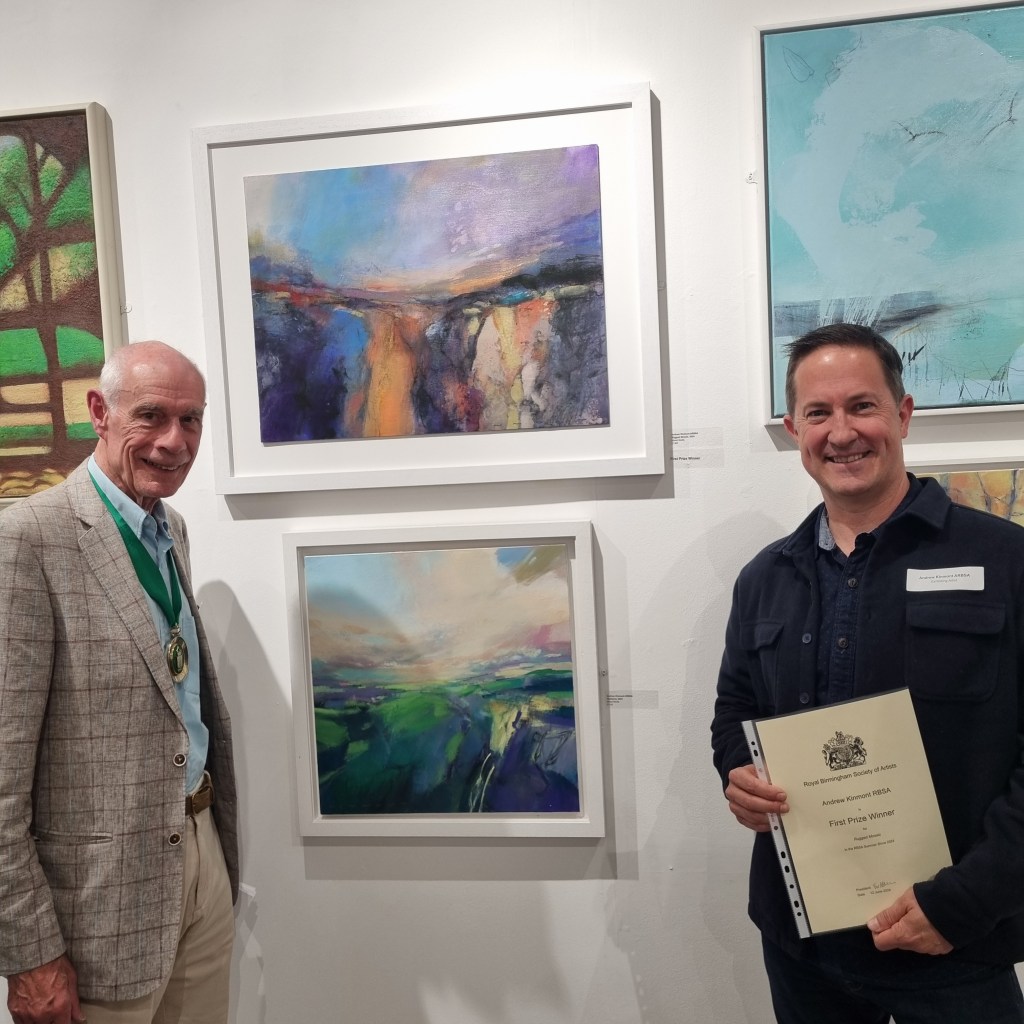
Kinmont’s paintings aren’t about showing a place exactly as it looks or telling a fixed story. They begin with moments from the natural world – moving water, changing light, the balance between land and sky – and focus on how those things feel rather than how they appear.
He’s drawn to colour, shape, and rhythm, and to the way small shifts in these can change the atmosphere of a painting. In that sense, his approach has affinities with James McNeill Whistler, who prioritised mood and harmony over descriptive detail. What matters is not recording a scene accurately, but creating a sense of space, movement, or calm that a viewer can step into.
A similar connection can be found in the work of Arthur Melville, whose use of light, energy, and looseness over precise description continues to resonate with Kinmont’s own way of working. In both cases, suggestion and rhythm take precedence over explanation.
Kinmont’s practice is shaped by the idea of embodied cognition – the understanding that we experience the world through our bodies as well as through thought. When we look at a painting, we often respond instinctively before we analyse it. He works with this by paying close attention to balance, energy, and flow, allowing the painting to register physically as well as visually.
Each work is built through contrast: heavier areas against lighter ones, bold marks beside quieter passages, stillness held alongside movement. These relationships give the paintings a quiet sense of life, echoing the rhythms of the natural world without trying to replicate it. Paintings are finished when they feel settled – when their parts sit together naturally and nothing needs explaining.
Ultimately, for Kinmont, a painting is meant to be felt first. It may recall the sensation of being somewhere, the movement of air or light, without depicting it directly. It offers a moment of pause, inviting the viewer to slow down and spend time with their own responses.

 Andrew Kinmont